 QGO
Customer Arrival Planning Guide for Busy Locations
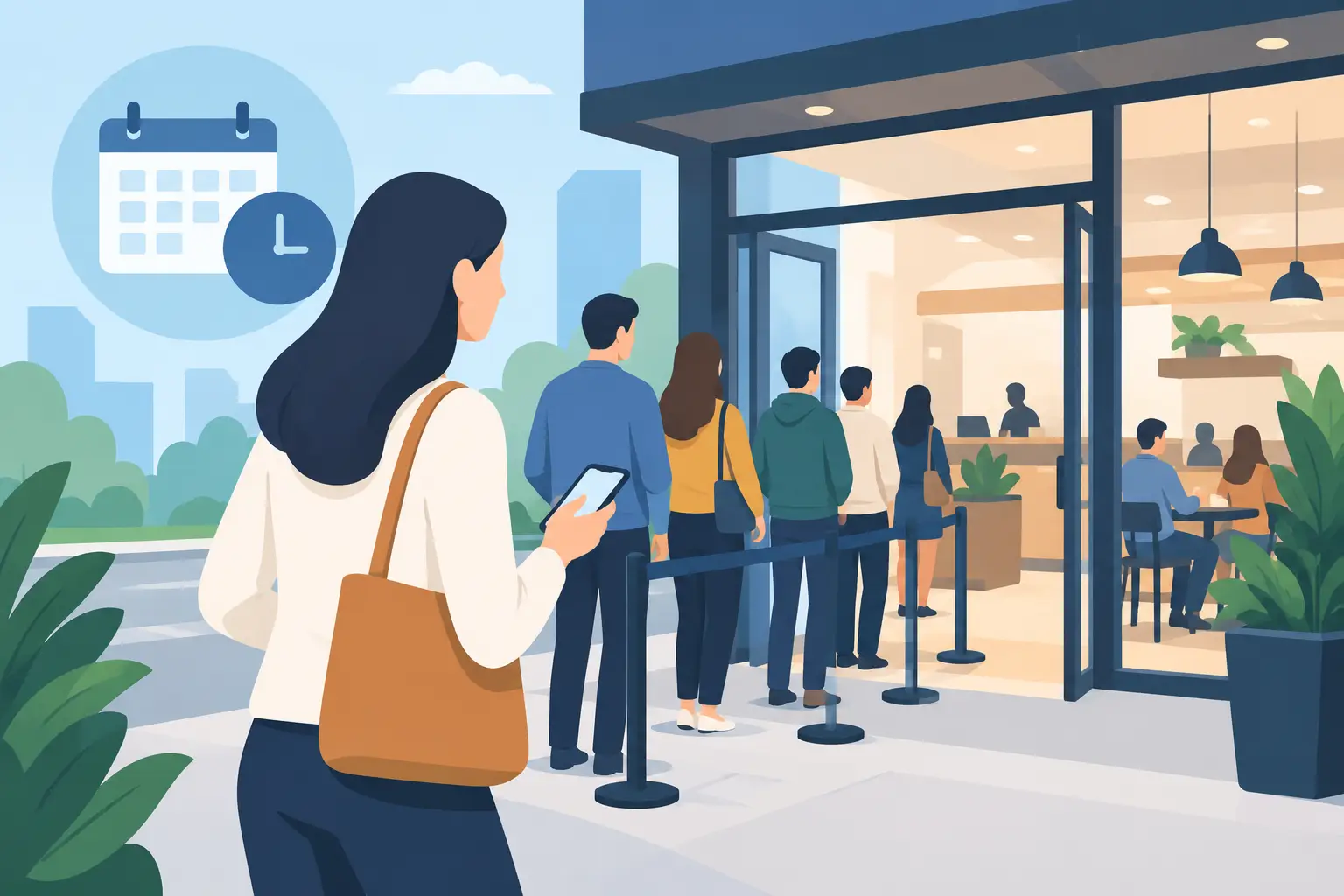
A line does not start when the first customer reaches the counter. It starts when several people decide to arrive at the same time. This customer arrival planning guide helps you manage that moment before a crowded entrance, packed pickup area, or frustrated line becomes the visible part of your customer experience.
For retail stores, salons, clinics, restaurants, service counters, and event venues, arrival planning is less about predicting every person perfectly. It is about creating a system that can absorb normal variation. Customers arrive early, late, in groups, and all at once after a promotion, lunch rush, or appointment block. Your operation needs room for that reality.
What customer arrival planning actually solves
Customer arrival planning is the process of matching expected customer demand with the people, space, and service capacity available at a location. It covers what happens before a customer walks in, how they check in, where they wait, and how staff respond when demand rises.
The goal is not to eliminate waiting in every situation. That is rarely realistic, especially when service times vary. The goal is to make waiting organized, visible, and less disruptive. A customer who knows they are checked in and can see progress is in a very different position from someone standing in a line with no estimate and no direction.
This also protects staff. When team members are constantly answering, “Who’s next?” or trying to rebuild a line after customers move around, they have less time to serve. A clear arrival process turns line management into part of the workflow instead of an extra task.
Start with your real arrival patterns
Do not plan around an average day. Averages hide the rushes that create problems. Look at when customers actually arrive, not just when your business is open or when appointments are scheduled.
Review a few weeks of transactions, check-ins, appointment records, and staff observations. Identify the periods when arrivals cluster. In a restaurant, that may be 12:00 to 1:00 p.m. and the first hour after work. In a clinic, it may be the 10 minutes before each appointment block. In retail, it may follow local events, school dismissal, or a social promotion.
Then compare arrivals with service capacity. If two associates can each complete four customer interactions every 15 minutes, your practical capacity is not just eight customers per 15 minutes. It is lower when one associate needs to handle returns, restock, answer phones, or train a new employee. Build your plan around normal operating conditions, not the best-case version of a shift.
Service time matters too. A quick pickup counter can handle a steady flow with a short buffer. A consultation-based business needs more protection because one complex interaction can delay everyone behind it. The less predictable the service, the more useful it is to separate check-in from service and give customers a way to wait without standing at the front desk.
Account for early arrivals and no-shows
Appointment schedules can create a false sense of control. If customers are asked to arrive 10 minutes early, several people may reach the location before staff are ready to serve them. If late arrivals are accepted without a clear rule, they can collide with the next scheduled group.
Set a simple policy for early and late arrivals, then make it easy for staff to apply. For example, early arrivals can check in and receive a notification when their service window opens. Late arrivals can be added to the next available slot rather than placed ahead of customers who arrived on time. The right rule depends on your business, but inconsistency is what creates arguments.
Design the arrival experience before the door
Customers should know what to do before they need help. A vague sign that says “Please wait” forces them to ask questions. A clear instruction tells them where to go, how to check in, and what happens next.
Keep the first action short. “Scan to join the line.” “Check in here.” “Enter your name and number.” The instruction should work for a customer carrying bags, holding a child’s hand, or trying to make a decision quickly. Avoid making them create an account, download an app, or find a confirmation email just to announce that they have arrived.
Mobile check-in is especially useful when floor space is tight. Customers can join from their phones, monitor their place, and wait nearby instead of forming a visible line. That does not mean every customer will want to use a phone. Keep a staff-assisted option for accessibility, customers without a smartphone, or anyone who simply prefers direct help.
QGO supports this kind of lightweight digital arrival flow without dedicated kiosks or a conventional app download. Customers can access the queue on their phone and, if they choose, add it to their home screen for quick access later.
Give customers a useful expectation
A wait estimate does not need to promise an exact minute. It needs to be credible enough to help a customer decide what to do next. “About 15 minutes” is better than silence. “We’ll notify you when you’re next” is helpful when service time is too variable for a reliable estimate.
Be careful with overly optimistic estimates. Telling someone five minutes when the likely wait is 15 creates more frustration than giving a conservative range. If your operation cannot estimate waits accurately yet, start with queue position or a notification when a customer is close. Improve the estimate as you collect more service-time data.
Build a plan for surges, not just normal flow
Every location has exceptions: a delayed provider, a staff callout, a bus group, a major return, a weather-driven rush, or an online order pickup spike. Your arrival plan should define what changes when the line crosses a threshold.
For example, when the queue reaches a certain number of customers, one team member may shift from back-office work to check-in support. When waits pass a target, staff may pause walk-in intake, offer a later service window, or direct pickup customers to a separate area. The specific triggers will vary, but they should be decided before the rush.
A surge plan also needs physical boundaries. If customers are waiting near the service point, where can they stand without blocking browsing, seating, entrances, or emergency access? If they are waiting digitally, how far away can they go and still return quickly? A digital queue reduces crowding, but it works best when customers understand the return expectation.
Do not overengineer this. A simple playbook is more likely to be used. Define who monitors the queue, who can adjust wait messaging, when extra help is called, and what staff say when capacity is temporarily limited.
Train staff on the words, not just the tools
The system can be simple and still fail if staff explain it differently every time. Customers notice uncertainty immediately. Give employees a short, repeatable script that matches the arrival flow.
At check-in, that may be: “You’re in line. You can wait nearby, and we’ll let you know when we’re ready.” If there is a delay: “We’re running about 10 minutes behind. You’re checked in, and we’ll keep your place.” These phrases are direct, calm, and more useful than asking customers to keep checking back.
Staff should also know how to handle exceptions. A customer may miss a notification, have a dead phone battery, or arrive with a question that needs a manager. Build a clear fallback path so exceptions do not force the whole line to stop.
Measure what customers feel
The number of people served matters, but it is not the only signal. Track average and peak wait times, the number of customers who leave before service, queue length at key times, and how often staff need to intervene. If you use appointments, compare scheduled arrival times with actual arrivals.
Listen for the language customers use. Complaints about “not knowing what was going on” point to a communication issue. Complaints about “waiting forever” may point to a capacity issue, an inaccurate estimate, or both. These are different problems and need different fixes.
Review the results after busy periods and make one adjustment at a time. Add clearer signage, shift one employee’s start time, separate pickup traffic, or change your early-arrival rule. Small changes are easier to test and easier for staff to adopt.
A better arrival plan does not make a busy location feel empty. It makes the busy period feel intentional. Give customers one clear action, give staff a shared process, and let the line stop being the loudest part of the visit.
Give your customers a line they don't have to stand in
QGO turns any counter into a smart digital queue: customers scan a QR code, take a number on their own phone and get alerted when it is their turn. No app download, no hardware, 16 languages.
Try QGO free How it works